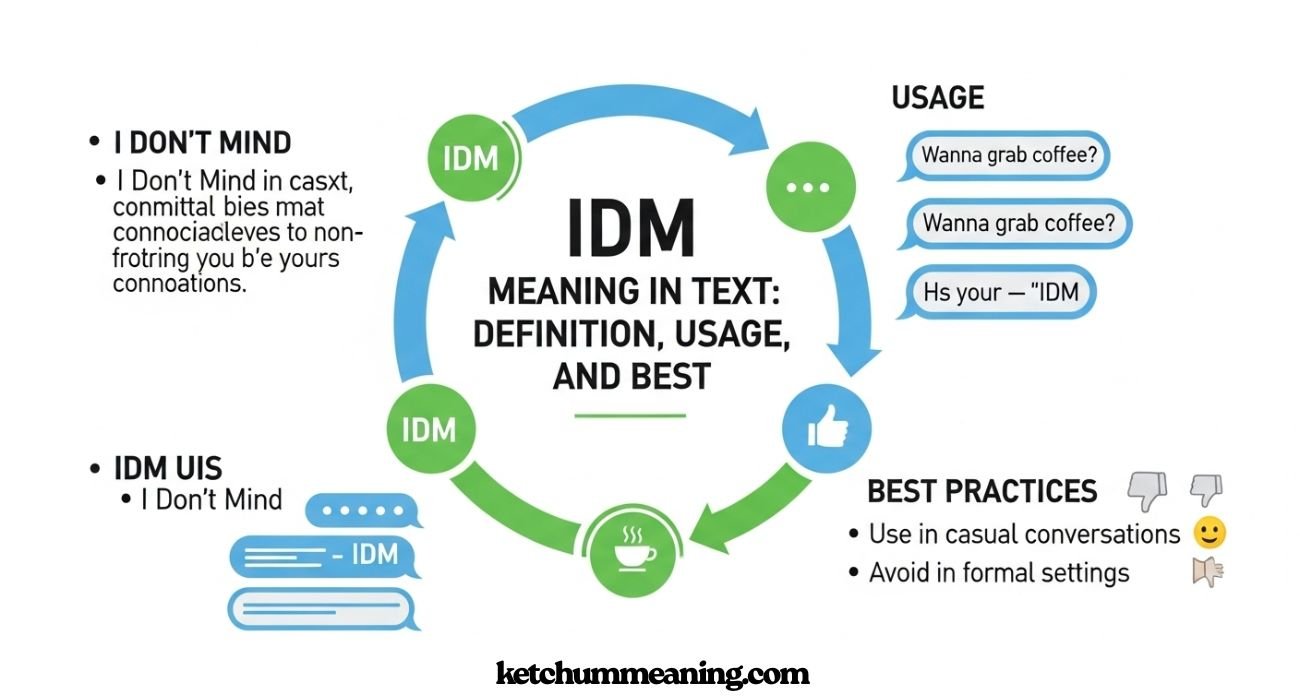
IDM Meaning in Text: Definition, Usage, and Best
IDM Meaning in Text is a short way to say “I don’t mind.” People use it in messages to show they are okay with any choice. It helps make texting fast and simple.
Many people see IDM in chats and feel confused. The letters look unclear at first. A short explanation can make it easy to understand.
IDM Meaning in Text appears in friendly talks, group chats, and casual messages. It shows agreement in a relaxed way. It also helps people sound flexible and calm.
What Does IDM Mean in Text?
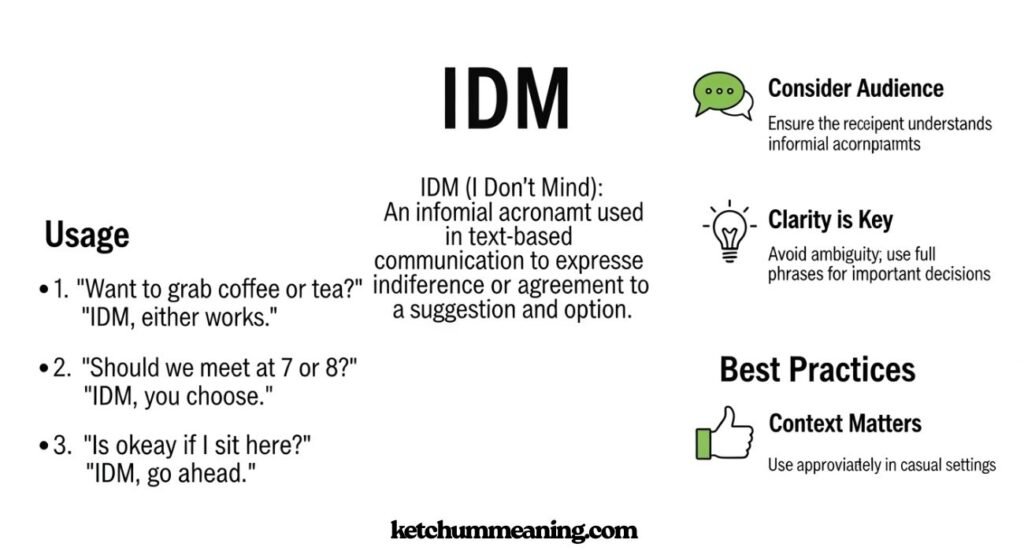
The most common IDM meaning in American texting is “I Don’t Mind.” This simple phrase expresses that the sender has no preference, which makes it an abbreviation for “I don’t mind.” People use IDM to show a flexible response in chat or to keep decisions easy and low-pressure. In most conversations, the IDM acronym signals friendliness and cooperation, especially when someone wants the other person to make the choice.
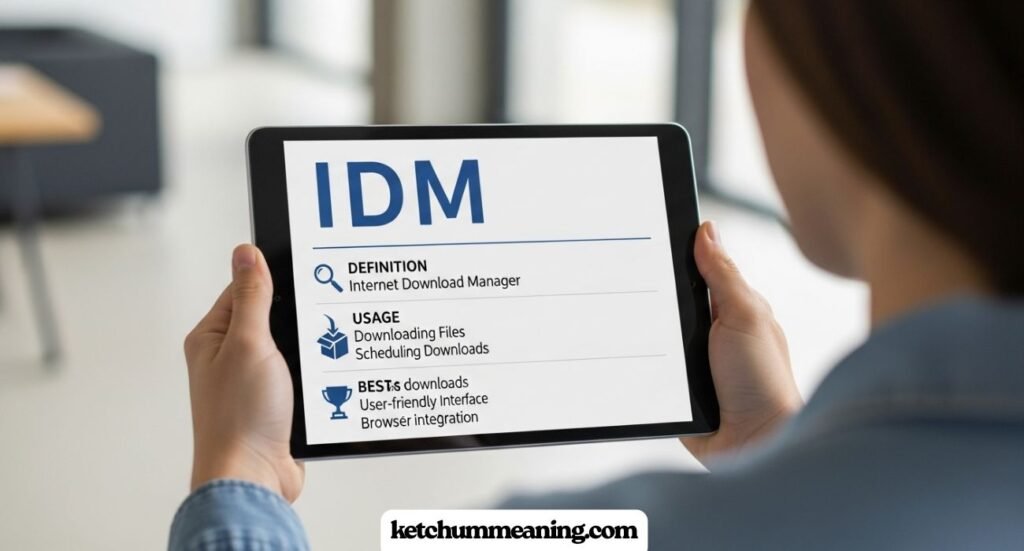
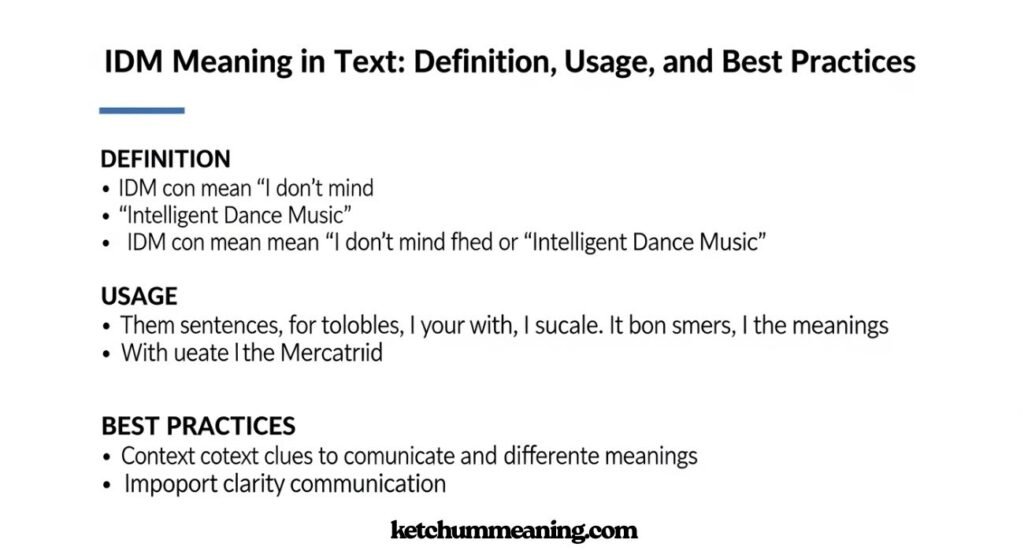
Although IDM in text almost always means I don’t mind, the expression does have other meanings depending on the IDM context. It can sometimes refer to Internet Download Manager, or in music culture, it may refer to Intelligent Dance Music (IDM) meaning. These are far less common in normal messaging, but they appear occasionally in technology or music discussions. Because of these differences, it is always important to understand how to use IDM in conversation based on the topic and the relationship between the speakers.
The table below shows the difference between the texting meaning and the less common meanings:
| Usage Type | Meaning | How Often It Appears | Setting |
| Texting / Chat | I Don’t Mind | Very Common | Everyday messages |
| Software Term | Internet Download Manager | Rare | Tech discussions |
| Music Genre | Intelligent Dance Music (IDM) | Moderate | Music communities |
| Creative Slang | I Do Music | Very Rare | Creative circles |
In day-to-day texting in the United States, the I don’t mind meaning is the one people expect.
IDM Meaning in Text Slang
Understanding IDM slang requires understanding the nature of messaging slang overall. In American messaging culture, people rely on fast replies, short forms, and informal messaging language. Because of this, IDM in text fits perfectly as a quick way to say that you are open to any option.
In the world of online messaging acronyms, IDM is considered a polite and neutral expression. It doesn’t show strong emotion, but it does show cooperation. Many people use it in place of casual texting phrases like “anything is fine,” “either way,” or “it doesn’t matter.” These similarities make IDM a part of many common chat slang examples used across social media platforms, messaging apps, and group chats.
The reason IDM has become such a common part of modern slang guide lists is that it reduces typing time while still keeping the conversation warm. The phrase “I don’t mind” is simple, but saying it repeatedly can feel long. Therefore, the abbreviation feels both efficient and polite.
IDM Meaning in Text Urban Dictionary
When people search for slang meanings, they frequently turn to Urban Dictionary. The Urban Dictionary IDM definition usually lists “I Don’t Mind” as the primary meaning. However, the platform also contains definitions connected to music culture, especially the genre Intelligent Dance Music (IDM).
Urban Dictionary highlights how slang can evolve based on subculture. If a conversation is happening in a music-related community, the IDM definition might shift toward the electronic genre. This is why understanding IDM context is essential to avoiding misunderstandings in texting.
Urban Dictionary also emphasizes that slang is fluid and based on how people use it in real life. This reinforces the importance of reading the tone of the message and the topic of the conversation before assuming the meaning.
Read Also : What Does IG Mean: Definition, Usage, and Best
Why People Use IDM in Text
The increasing popularity of IDM usage reflects a broader change in how Americans communicate digitally. People look for ways to save time and reduce the number of typed words without sounding rude. Since “I don’t mind” is a gentle phrase, shortening it still preserves its friendliness.
Another reason people use IDM is to keep conversations smooth. When someone doesn’t have a preference, they often want to avoid slowing down decision-making. Texting culture values quick communication, and IDM allows people to respond instantly. It is part of the broader trend where people use internet slang terms in place of longer phrases.
One important factor in U.S. texting culture is the desire to avoid appearing too demanding. Saying IDM gives the other person control, which can feel polite and considerate. This makes it popular in casual and friendly chats where people prefer a relaxed tone.
Nuances of Tone When Using IDM
The meaning of a phrase can change dramatically depending on tone, and tone in text communication is often harder to interpret because people cannot hear a voice or see facial expressions. When someone uses IDM, the tone can seem polite, friendly, romantic, or even dismissive, depending on context.
If someone writes “IDM either time,” the tone feels flexible and polite. On the other hand, if a person writes “IDM whatever,” the message can appear careless or annoyed. Because texting lacks emotional cues, the reader must rely on wording alone, which increases the risk of misinterpretation.
A romantic partner might use IDM warmly, such as: “IDM where we go, I just want to spend time with you.” This type of expression blends the I don’t mind meaning with affection, which makes it feel personal.
Understanding these tone differences is crucial for maintaining good texting etiquette, especially when communicating with people you don’t know well or when communicating in professional contexts.
Professional Alternatives to IDM
In professional settings, most people avoid slang. Using professional texting language shows respect, clarity, and responsibility. While IDM is perfectly acceptable with friends, it may look too informal in emails or workplace messages. Instead of IDM, professionals use expressions like “Either option works for me,” “I don’t have a preference,” or “I am flexible with the timing.”
These alternatives communicate the same openness but maintain the polished tone expected in work environments. Because workplaces rely heavily on clear communication, avoiding slang reduces confusion and prevents misunderstandings. Using more thoughtful language also makes the writer sound dependable and professional.
Employees who adapt their tone based on the audience show strong communication awareness, which is a valuable skill in the U.S. workplace.
Casual Alternatives to IDM
In everyday American texting, many people prefer to switch between different casual texting phrases instead of using IDM repeatedly. Phrases like “anything’s fine,” “up to you,” “I’m cool with whatever,” or “doesn’t matter to me” all express the same meaning but add variety to the conversation.
These expressions feel natural in informal messaging language and help maintain a friendly tone. People often change their phrasing depending on mood, relationship, and level of enthusiasm. Understanding these choices helps someone avoid sounding repetitive or uninterested in casual conversations.
These casual alternatives also help people express a softer or more playful tone, something IDM alone may not always communicate.
Polite Alternatives to IDM
Some situations require more politeness, especially when trying to avoid appearing passive or uninterested. Polite alternatives for IDM include phrases such as “Whatever works best for you,” “I’ll go along with your choice,” and “Either way is good with me.” These expressions help maintain harmony in the discussion and prevent accidental offense.
U.S. communication culture values politeness in situations involving parents, elders, teachers, supervisors, or new acquaintances. Using more thoughtful alternatives can make the speaker sound considerate and emotionally intelligent.
These expressions also help avoid the common perception that abbreviations can sound cold or detached. By adding warmth, the sender communicates cooperation while preserving respect.
How to Choose the Best Alternative
Choosing the right phrase depends on the nature of the relationship, the topic being discussed, and the desired tone. For friends, casual alternatives work best because they match the relaxed atmosphere of most IDM usage. In romantic relationships, warmer phrases help ensure the partner feels valued. In workplace settings, professional alternatives show seriousness and attention to detail.
Choosing alternatives also depends on the level of preference the speaker actually has. If someone genuinely does not care, expressions like IDM or “anything works” are appropriate. However, if there is a mild preference, it is better to express it early to avoid confusion later.
This decision-making process reduces the likelihood of misunderstandings in texting and helps maintain clear communication across different social groups.
10 Examples of IDM and Its Alternatives in Action
Because context changes the meaning of slang, it is helpful to study real conversation examples using IDM. These examples show how the phrase fits naturally into American texting habits. People often use IDM when deciding on food, schedules, weekend plans, or entertainment. These everyday scenarios demonstrate the usefulness of the IDM abbreviation and how it supports friendly communication.
For example, when a friend asks if you prefer pizza or tacos, saying IDM shows flexibility without pressure. In a work conversation, replacing IDM with “Either option works for me” maintains professionalism. In romantic conversations, saying “Doesn’t matter as long as we’re together” adds warmth and emotion. In group chats, phrases like “I’m cool with whatever” help groups make decisions more efficiently.
These examples highlight the importance of context when choosing between IDM and its alternatives.
Common Mistakes When Using IDM
One of the biggest mistakes is using IDM too often, which can make the sender appear passive or uninterested. Another mistake is using IDM when the person actually has a preference, which can lead to misunderstandings. Using IDM with the word “whatever” can sometimes sound rude or dismissive, depending on the reader’s interpretation.
Using IDM in professional or formal writing is also discouraged because slang can reduce credibility and make the communication seem unclear. It is also dangerous to assume everyone understands IDM because some people, especially older generations, may be unfamiliar with newer slang.
Understanding these mistakes helps maintain clear, respectful communication in both personal and professional settings.
Understanding IDM in Modern Texting
IDM is a common abbreviation used in digital conversations to express that someone has no strong preference. In texting culture, this shorthand helps people communicate more quickly while still sounding polite. It fits naturally into everyday conversations and is recognized by most frequent texters.
People appreciate IDM because it keeps communication light and efficient. Since the phrase “I don’t mind” is neutral and friendly, its shortened form carries the same tone. This makes it ideal for casual interactions, group chats, and simple decision-making situations where a fast, flexible reply is helpful.
Read Also : WYO Meaning in Text: Definition, Usage, and Best Alternatives
Why IDM Matters in Digital Communication
As messaging becomes faster, shorter expressions like IDM help conversations flow smoothly. People use it to remove pressure from choices and show they are open to different options. Its simplicity makes it easy to insert into almost any conversation without sounding abrupt or unclear.
IDM also plays a role in modern texting etiquette, where readers expect quick responses and clear intentions. Offering a flexible answer without overexplaining helps maintain a comfortable tone. Because of this, IDM has become a familiar part of online communication, especially among younger users.
How Tone Affects the Meaning of IDM
Tone can completely change how IDM is interpreted. When used positively, it communicates cooperation and openness. However, if paired with dismissive language, it may appear uninterested or cold. Understanding tone ensures the message comes across as intended and avoids accidental misunderstandings.
Writers must consider how their words will sound without vocal cues. Adding friendly context, such as emojis or warm phrases, can soften the meaning. This ensures IDM is received as supportive rather than careless. Thoughtful usage helps maintain healthy communication across different texting situations.
Using IDM With Friends and Peers
Friends often use IDM to keep plans simple and avoid unnecessary back-and-forth. It helps decisions move faster, whether choosing food, movies, or meeting times. In relaxed conversations, this abbreviation feels natural and fits the casual tone common among close connections.
Among peers, IDM can prevent disagreements by signaling openness. It reassures others that any choice is acceptable, reducing tension in group situations. Because friendships thrive on easy, low-pressure communication, IDM supports smoother planning and avoids unnecessary conflicts or delays.
When to Avoid Using IDM
Some situations require direct preferences rather than neutral responses. In important decisions, using IDM may create confusion or suggest lack of interest. It is better to state clear opinions when the outcome matters or when others need definite guidance.
IDM can also feel too casual in professional contexts. Workplace communication often requires clarity and precision, so full sentences create a more respectful tone. Avoiding shorthand helps prevent misinterpretation and maintains professionalism in formal exchanges.
Alternatives to IDM in Different Settings
Different settings call for different language styles. Instead of IDM, people may say “Anything works for me” or “I’m flexible” to sound warmer or clearer. These alternatives offer the same meaning while adjusting tone for specific relationships or situations.
Professional settings benefit from polished language such as “I have no preference” or “Either option is fine.” These alternatives maintain clarity without relying on abbreviations. Choosing the right phrase ensures the message matches the audience and purpose of the conversation.
Common Misunderstandings With IDM
Some readers may interpret IDM as dismissive, especially if they expect enthusiasm or direct feedback. Without vocal tone, the abbreviation can seem overly neutral. Understanding this helps users decide when to add context or choose a more expressive response.
Another misunderstanding occurs when someone uses IDM despite having a real preference. This can lead to choices they do not enjoy or cause frustration later. Honest communication prevents confusion and helps everyone feel satisfied with the outcome.
The Future of Texting Abbreviations Like IDM
As digital communication continues evolving, abbreviations like IDM will likely remain popular. They save time, reduce typing effort, and blend naturally into casual conversation styles. Future messaging trends may introduce even more shortcuts for everyday phrases.
However, clarity will always matter in online communication. People may continue balancing convenience with context, choosing when to use abbreviations and when to use full sentences. This balance will shape how abbreviations like IDM continue to appear in modern texting culture.
FAQs
What does IDM mean in a text?
IDM means “I don’t mind,” showing someone has no preference.
It indicates they’re okay with any option you choose.
What does it mean if a girl says IDM?
If a girl says IDM, she’s simply saying she’s fine with whatever.
It usually reflects comfort, flexibility, or no strong opinion.
What does IDM phone mean?
In phones or tech, IDM refers to Internet Download Manager, a download tool.
It helps speed up downloads and organize files on a device.
Does IDM mean yes or no?
IDM is closer to “yes,” because it signals agreement or acceptance.
It’s a neutral yes—showing they’re okay with the option.
Final Thoughts
Understanding IDM Meaning in Text helps people communicate better. Many people use IDM in casual chats because it is short and easy to type. It tells someone that you agree or that you have no strong preference. When you know this meaning, you read messages more confidently. You also reply in a way that feels correct for the situation.
IDM Meaning in Text also guides you in choosing the best alternative when you want to sound polite, casual, or professional. You can match your words to the tone of your conversation. This skill makes texting smoother and clearer. It also helps you avoid mistakes and misunderstandings. When you learn these simple rules, your messages become easy for everyone to understand.