STG Meaning in Text: Complete Guide to What It Really Means
STG Meaning in Text stands for “Swear To God”. People use it in messages to show honesty. It also shows strong feelings like excitement or frustration.
You see STG everywhere online. It appears in TikTok, Snapchat, and Instagram. Many young people use it every day in chats.
STG makes texting fast and emotional. It is part of Gen Z slang. Using it shows your feelings clearly in short words.
What Does STG Mean in Text? (The Core Meaning)
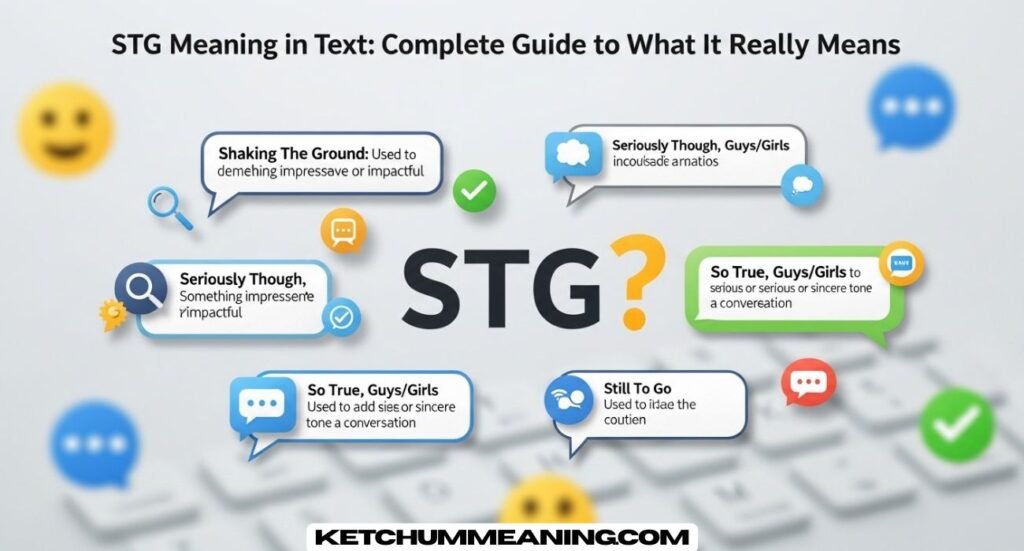
The most common STG acronym meaning is “Swear To God.” When someone types STG in a message, they are emphasizing honesty, truthfulness, or strong emotion. It acts like a digital exclamation point that shows the writer is serious about what they are saying. In many ways, Swear to God texting reflects the natural way language evolves in modern digital communication, making it fast, emotional, and context-driven.
People often use STG in social media and texting to express frustration, disbelief, excitement, or emphasis without having to write out the full phrase. For example, saying, “Stg this day keeps getting worse” shows frustration in just three letters. Similarly, “Stg that movie was amazing” expresses strong excitement. This efficiency and emotional punch make STG texting meaning one of the most popular casual text acronyms in Gen Z texting culture.
Why People Use “STG” in Texting
STG slang definition is popular because it conveys emotion quickly and effectively. Unlike traditional language, which can be slow and formal, texting and social media encourage speed and expressiveness. Writing “Swear to God” fully can feel too long in a casual chat, so STG abbreviation solves this problem perfectly.
Young people, especially teens and young adults in the USA, often use STG in social media and texting to emphasize honesty, show frustration, or add drama to their messages. Its appeal lies in its versatility—it can be serious, funny, or even threatening depending on the context. It also matches the rhythm of modern communication, which favors informal texting expressions and quick, expressive messages that carry emotional weight without extra words
Examples of “STG” in Real Conversations
Understanding STG examples in conversation is the best way to grasp its usage. In casual texting, STG can take on different tones. For instance, a serious text like “Stg I didn’t take your charger” emphasizes honesty. A humorous example is “Stg this cat thinks he owns the house 😹,” where the acronym conveys playful exaggeration. Frustrated messages often read, “Stg nothing is going right today,” reflecting stress or annoyance. Excited usage might look like, “Stg that concert was EVERYTHING,” showing hyperbole and enthusiasm.
The beauty of STG texting meaning is its flexibility in conveying tone. These examples illustrate how a three-letter acronym can express honesty, frustration, humor, and excitement all at once, proving its role as a key element of Gen Z texting culture and modern digital communication.
Different Meanings of STG (Less Common but Real)

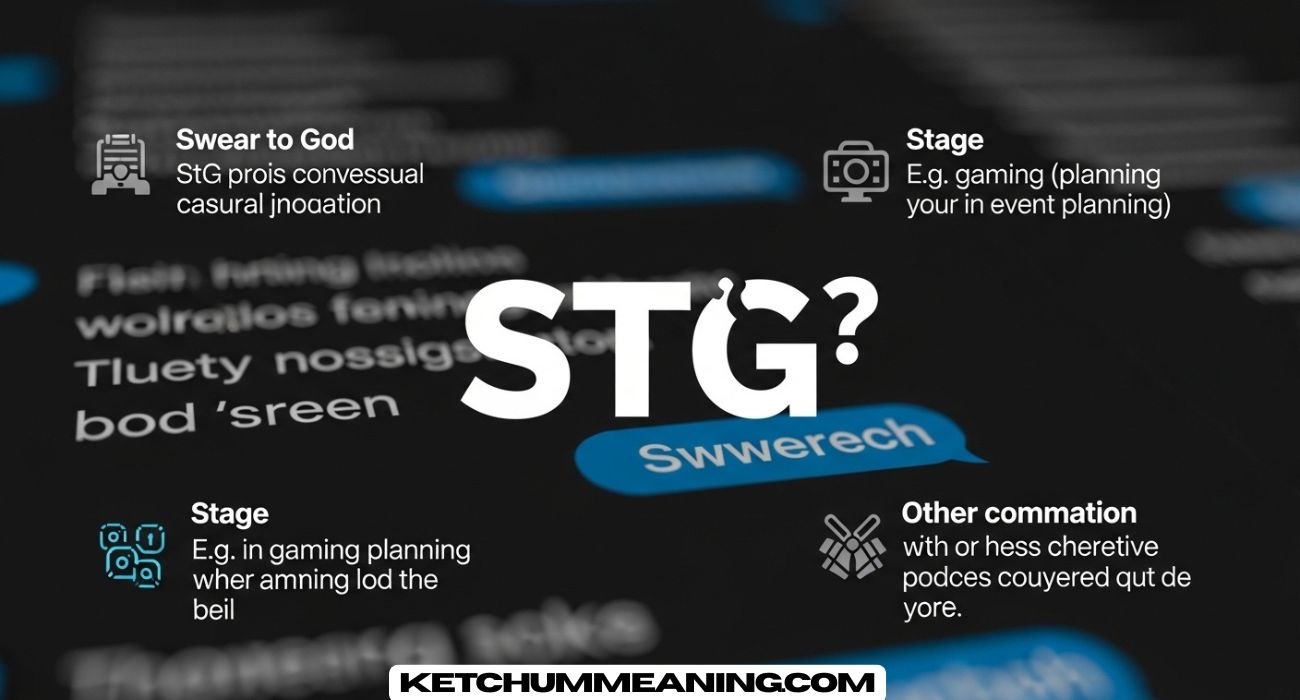
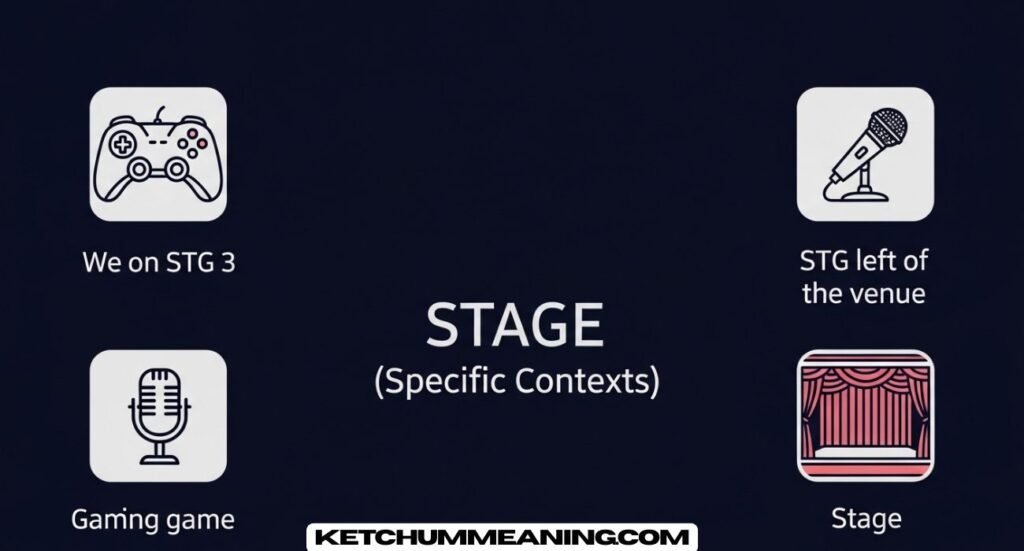
While the most common usage is Swear To God, STG can also have less common meanings depending on context:
1. “Set The Ground”
This usage appears in planning or organizing situations. For example, someone might say, “We need to STG before the project starts,” meaning to prepare the foundation for a task.
2. “Shoot The Gun”
Used mainly in gaming or action-related conversations. For instance, in an online game, a player might write, “STG now, I’m taking the lead,” referring to shooting in-game.
3. “Something To Go”
Appears in online shopping, delivery, or food order tracking. A message like “STG for pickup in 15 minutes” is common in casual messaging around logistics.
4. “Special Task Group”
Mostly used in military or government contexts. For example, “The STG has been deployed” would refer to a specific operational group.
5. “Saint George”
A cultural or religious reference, usually in texts discussing traditions or history.
It is important to note that in texting and social media slang, 99% of the time, STG still means Swear To God. The other meanings are context-specific.
How to Identify the Correct Meaning Through Context
STG in social media can vary in meaning depending on tone, relationship, platform, and topic. Reading the situation carefully is key to understanding what does STG mean. If a friend texts, “Stg you’re hilarious,” it is an emotional, playful use. If a work chat mentions “STG meeting at 3 PM,” it likely refers to an organizational term, not Swear To God texting. Similarly, “Did you get the STG pack in the game?” clearly points to a gaming context.
Recognizing the right meaning requires attention to tone, audience, and the surrounding text. Texting abbreviations and online chat shorthand rely heavily on shared understanding, which is why context matters more than the acronym itself.
Is STG Considered Rude or Offensive?
Whether STG is rude depends largely on tone and audience. When used aggressively or in a religiously sensitive context, it can be offensive. For example, “Stg if you do that again I’m done with you” carries a threatening tone. On the other hand, in casual texting or Gen Z texting culture, most people use it playfully or for emphasis, as in “Stg that burger was amazing 😍🍔.”
The intention behind the message matters more than the acronym itself. STG texting meaning is generally neutral and casual but can shift toward offense when paired with aggressive or critical language.
Who Commonly Uses “STG”?
STG in social media and texting is most frequently used by teenagers and young adults in the USA. It is a hallmark of Gen Z texting culture, appearing in Snapchat streaks, TikTok comments, Instagram DMs, and casual group chats. While older generations might occasionally use it, the acronym is primarily associated with youthful, digital-first communication, and texting abbreviations like this are now standard in online conversations.
STG Meaning in Social Media Platforms
STG on TikTok is often used for dramatic or humorous effect. Users might caption a video, “Stg this filter made me scream 😂🔥,” showing emotion and exaggeration.
STG on Snapchat appears mostly in private chats. A typical message could read, “Stg I just woke up don’t snap me yet,” indicating honesty or playful frustration.
STG on Instagram shows up in comments, captions, or reels. For instance, “Stg her outfit is perfection ✨😍” expresses admiration or excitement.
STG on Twitter/X emphasizes intensity or dramatizes events. A tweet like, “Stg the weather changed 3 times today” uses the acronym to convey disbelief or frustration. Across platforms, STG in social media functions as a quick, emotionally charged shorthand.
Tone Variations of STG (How the Emotion Changes)
| Tone | Example | Meaning |
| Serious | “Stg I’m telling the truth.” | Assurance |
| Funny | “Stg this cat thinks he owns it.” | Humor |
| Frustrated | “Stg nothing is going right today.” | Stress |
| Excited | “Stg that concert was EVERYTHING.” | Hyperbole |
| Threatening | “Stg do that again and see what happens.” | Warning |
Tone is key in informal texting expressions, and STG examples in conversation often depend entirely on how the sender feels.
STG vs Similar Slang Terms
Understanding related slang helps differentiate STG texting meaning. ISTG vs STG is a common comparison: ISTG means “I Swear To God” and is more personal. OMG (Oh My God) expresses surprise, FR (For Real) signals honesty less intensely, while TBH (To Be Honest) is softer and reflective. IDK (I Don’t Know) is completely different. Knowing these distinctions is essential for clarity in casual text acronyms.
Should You Use STG in Professional Messages?
STG abbreviation is informal and should be avoided in professional contexts. Using it in work emails, academic papers, or communications with elders can seem unprofessional. It is best reserved for texting friends, siblings, or casual online conversations.
Using slang appropriately is part of understanding modern digital communication norms and respecting audience expectations.
Cultural Notes on “Swear To God”
“Swear to God” has deep cultural significance in American society. It expresses sincerity, seriousness, and trustworthiness. Using it in Swear to God texting carries this emotional weight, even in shorthand form. As a form of social media slang, STG reflects a broader trend where youth use language to convey connection, authenticity, and emotional intensity.
Custom Example Sentences Using STG
Examples illustrate STG texting meaning clearly. “Stg if the bus doesn’t come, I’m going home” shows frustration. “Stg this rain is never-ending 🌧️😭” reflects stress. “I’m so tired, stg” signals exhaustion, while “Stg she didn’t even notice my haircut” conveys disappointment.
Humorous uses like “Bro stg that was hilarious” showcase playful exaggeration. These examples cover a wide range of emotions in casual text acronyms and informal texting expressions.
When You Should NOT Use STG
Avoid STG in sensitive religious conversations, professional messages, or when unsure about the tone. Misinterpretation is common if the recipient does not understand the context or humor. Responsible use is key in texting abbreviations and online chat shorthand.
Long Explanation: The Psychology Behind Slang Like STG
Slang like STG exists because people want to communicate quickly, express emotion efficiently, and feel connected socially. Internet slang meanings and online chat shorthand create a sense of belonging among youth. Gen Z slang STG is part of a larger trend in modern digital communication, where language adapts to the speed, emotion, and social identity of online platforms.
The Linguistic Structure of STG
Linguistically, STG is a contraction, reducing “Swear To God” into three letters. It functions as a discourse marker, adding tone to a sentence, and as an intensifier, strengthening emotion. This makes it highly flexible in informal texting expressions, casual text acronyms, and social media slang.
Does STG Mean the Same in All Countries?
Generally, yes. In Western countries like the USA, STG is mostly casual emphasis. In more religious countries, it may carry extra weight. In gaming communities, STG can reference game mechanics, while in youth culture, it often conveys dramatic humor. Understanding these nuances is crucial for effective Swear to God texting and STG in social media use.
Full Summary Table of STG Meanings
| Meaning | Context | Frequency |
| Swear To God | Texting, chats | ⭐⭐⭐⭐⭐ |
| Set The Ground | Prep tasks | ⭐ |
| Shoot The Gun | Gaming | ⭐ |
| Something To Go | Shopping | ⭐ |
| Saint George | Cultural | ⭐ |
How to Use STG Safely and Correctly
To use STG responsibly, always know your audience and check the emotional tone of your message. Use it sparingly to avoid sounding overly dramatic and avoid sensitive contexts. It works best when expressing honesty, excitement, or frustration in informal texting expressions and casual text acronyms. Proper use ensures you communicate effectively without confusion or offense.
Understanding STG: The Popular Gen Z Acronym
STG Meaning in Text is short for “Swear To God” and is widely used among teens and young adults. It’s a quick way to express honesty, excitement, or frustration, often replacing the full phrase for efficiency in texting and social media.
The acronym also reflects Gen Z texting culture, where brevity and emotion are key. Using STG adds intensity to messages, whether in casual chats, TikTok captions, or Instagram comments. Understanding its usage is crucial to avoid confusion and communicate effectively in modern digital conversations.
See Also :What Does WSG Mean: Definition, Usage
The Emotional Power of STG in Texting
STG isn’t just a casual abbreviation—it carries emotional weight. People use it to show sincerity, emphasize feelings, or highlight important points. In texting, Swear to God texting allows users to express themselves fully without writing long sentences.
It works in various contexts, from humor to frustration. For example, “Stg this movie was amazing” shows excitement, while “Stg I’m so tired” conveys exhaustion. Its flexibility makes it one of the most versatile casual text acronyms in online communication.
Common Misunderstandings About STG
Many people confuse STG with other acronyms like ISTG (“I Swear To God”) or OMG (“Oh My God”). While similar in tone, ISTG vs STG differs slightly in personalization and emphasis. Understanding these differences is essential in texting and social media slang.
Misusing STG in professional or formal contexts can lead to confusion or unintended offense. It’s important to recognize that STG in social media is informal and best suited for casual conversations among friends or peers in online communities.
STG Across Social Media Platforms
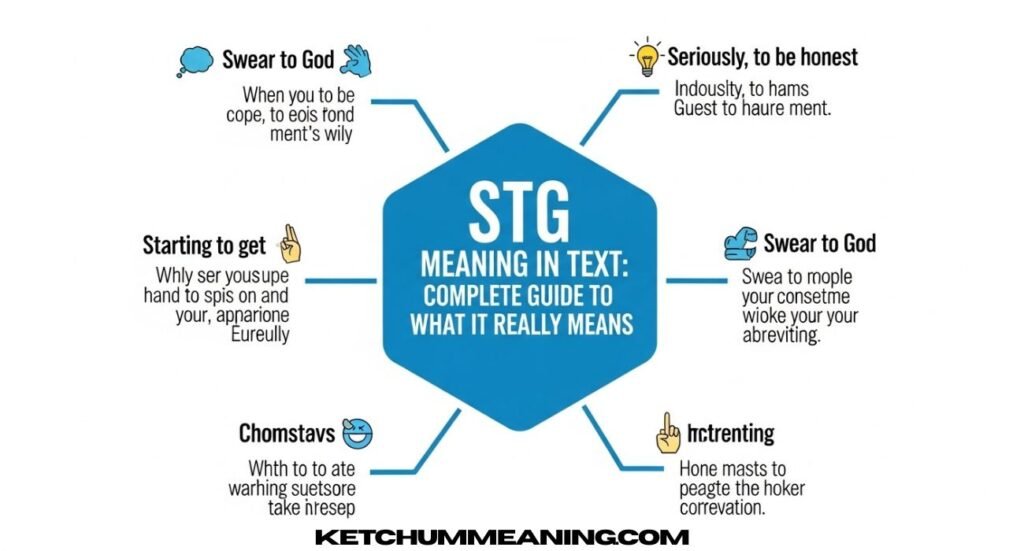
STG appears differently depending on the platform. On TikTok, users might exaggerate for humor, while Snapchat often features private or playful texts. Instagram captions may use STG to express admiration or excitement, and Twitter/X messages usually show frustration or disbelief.
Its versatility reflects online chat shorthand and modern communication habits. Social media users rely on STG to convey strong feelings quickly, making it an essential part of Gen Z texting culture and digital expression across multiple platforms.
How to Interpret STG Correctly
Correct interpretation of STG depends on tone, relationship, and context. In a joking conversation, it emphasizes humor, while in serious messages, it signals truthfulness. Checking surrounding words, emojis, or situation cues helps understand STG texting meaning accurately.
Recognizing context prevents misunderstandings. For example, a gaming chat using “STG now” may mean an action, whereas a casual text saying “Stg I’m tired” reflects emotion. Understanding usage is key to navigating informal texting expressions effectively.
Cultural Significance of Swear To God
“Swear To God” has a historical and cultural role in American English. It expresses sincerity, trust, and seriousness, and using Swear to God texting carries this emotional tradition into the digital age.
Younger generations adapt it as shorthand, showing how texting abbreviations evolve in modern digital communication. STG represents a bridge between traditional expressions of honesty and fast, casual online interactions.
Situations Where STG Should Be Avoided
STG should not be used in professional emails, formal messages, or sensitive religious conversations. Misuse can lead to confusion or offense, particularly in cross-generational communication.
Being aware of audience and context ensures responsible use. Casual text acronyms like STG are best reserved for friends, online peers, or social media contexts where informal slang enhances expression rather than causing misunderstanding.
See Also : MFS Meaning in Text: What It Really Means in 2026
Enhancing Digital Conversations with STG
Using STG effectively can make messages more expressive, dramatic, or humorous. It’s a simple way to convey strong emotions in informal texting expressions without writing lengthy explanations.
When combined with emojis or other social media slang, STG adds personality and intensity. It strengthens connection in digital interactions and ensures messages are engaging, relatable, and clearly understood in modern Gen Z texting culture.
FAQs
What is the meaning of STG in text?
STG means “Swear To God” and is used to show honesty, emphasis, or strong emotion in texting.
How to respond to STG?
You can respond with agreement, reassurance, or humor depending on the tone, like “I believe you” or “Haha, same here!”
What does GTS mean in text?
GTS usually means “Good To See” or “Go To Sleep”, depending on the context of the conversation.
What does OTG mean in text?
OTG means “On The Go”, often used to indicate someone is busy or traveling.
Conclusion
Understanding the STG Meaning in Text helps people read messages clearly. It shows honesty, excitement, or strong feelings in a short way. Using STG makes texting faster and more expressive. People can use it in social media, chats, or group messages to add emotion. Knowing the meaning avoids confusion and helps communication.
STG also teaches how language changes in modern texting. It is part of Gen Z texting culture and casual online conversation. Using it carefully makes messages friendly and clear. STG adds style and feeling to digital chats. Learning its proper use helps everyone communicate better and understand each other in today’s digital world.